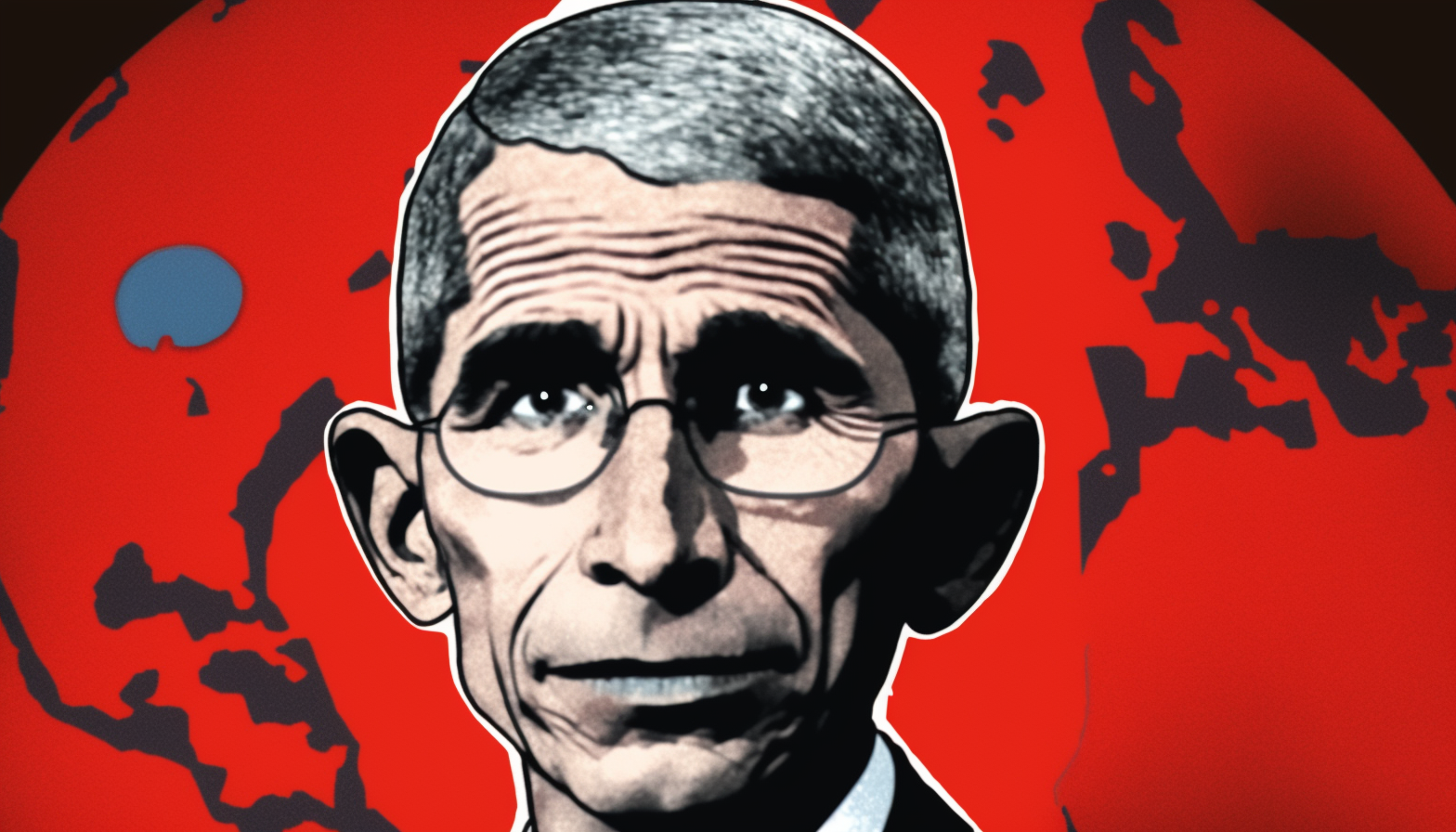

As the COVID-19 pandemic continues to ravage the world, there has been an ongoing debate about the origins of the virus. One theory that has gained traction in recent months is that COVID-19 was created in a lab. While the idea may have once been dismissed as a conspiracy theory, it is gaining attention from scientists and world leaders alike. In this article, we will explore the evidence supporting the theory that COVID-19 was created in a lab.
First, it is important to understand that the theory of a lab origin does not necessarily mean that the virus was intentionally created as a bioweapon. Rather, it suggests that the virus was accidentally leaked from a laboratory in Wuhan, China, where the virus was first identified in late 2019.

One of the main pieces of evidence supporting the lab origin theory is the fact that the Wuhan Institute of Virology, a biosafety level 4 laboratory, is located just a few miles away from the wet market that was initially believed to be the source of the virus. While the market was thought to be the origin of the virus due to its proximity to the first identified cases, subsequent investigations have failed to find any evidence linking the market to the virus.
Additionally, researchers have identified several unusual features of COVID-19 that suggest it may have been created in a lab. For example, COVID-19 has a spike protein that is particularly effective at binding to human cells, which has led some scientists to speculate that the virus may have been genetically modified in order to better infect humans.
Furthermore, a study published in the scientific journal Nature in 2020 found that the genetic sequence of COVID-19 was “96.2% identical at the whole-genome level to a bat coronavirus.” However, the study also noted that “the RBD [receptor-binding domain] of SARS-CoV-2 [the virus that causes COVID-19] is distinct from those of bat SARS-CoV-like coronaviruses.” This suggests that the virus may have been manipulated in a lab in order to make it more infectious to humans.
Finally, there have been a number of reports of safety concerns at the Wuhan Institute of Virology. In 2018, U.S. officials warned about inadequate safety measures at the lab, and in early 2020, a group of scientists wrote a letter to the Lancet expressing concern about the lab’s biosafety protocols.
While there is certainly not conclusive evidence that COVID-19 was created in a lab, the theory is gaining more attention and support from scientists and world leaders. In May 2021, U.S. President Joe Biden ordered an intelligence investigation into the origins of the virus, including the possibility of a lab leak. The World Health Organization has also called for further investigation into the lab origin theory.

Dr. Anthony Fauci, the director of the National Institute of Allergy and Infectious Diseases (NIAID) and a prominent figure in the U.S. response to the COVID-19 pandemic, has been connected to the lab leak theory of COVID-19 in several ways.
First, Dr. Fauci’s agency, the NIAID, provided funding to the Wuhan Institute of Virology for research into bat coronaviruses. This research was aimed at understanding how these viruses can infect humans and how they can be prevented. While the research was not focused specifically on creating a virus that could infect humans, some have suggested that this funding could have indirectly contributed to the development of COVID-19.
Second, Dr. Fauci has been accused of downplaying the lab leak theory early in the pandemic. In February 2020, he told reporters that the virus “was most likely of animal origin.” However, as evidence supporting the lab leak theory has emerged, Dr. Fauci has expressed openness to the possibility that the virus could have originated in a lab.
Third, Dr. Fauci has faced criticism from some lawmakers and media outlets for his emails, which were released in June 2021 through a Freedom of Information Act request. The emails include discussions of the lab leak theory and show that Dr. Fauci was aware of concerns about the safety of the Wuhan Institute of Virology. Critics have pointed to these emails as evidence that Dr. Fauci was not transparent about the lab leak theory and may have misled the public about the origins of COVID-19.

It is important to note that while Dr. Fauci’s connections to the lab leak theory have drawn criticism, there is now evidence to suggest that he played a direct role in creating or covering up the origins of COVID-19.
Dr. Anthony Fauci did not personally collaborate on papers showing that COVID-19 was of animal origin, but the scientific consensus early in the pandemic was that the virus likely originated in animals. This conclusion was based on the similarities between the genetic sequence of COVID-19 and other coronaviruses found in animals, as well as the fact that the first cases of COVID-19 were linked to a seafood market in Wuhan, China where live animals were sold.
However, as the lab leak theory gained more attention, some researchers began to question the animal origin hypothesis. In May 2021, the Wall Street Journal reported that three researchers from the Wuhan Institute of Virology became sick in November 2019 and were hospitalized with symptoms consistent with COVID-19, suggesting that the virus may have originated from a lab accident. While the report did not conclusively prove the lab leak theory, it did add to the evidence suggesting that the virus may not have come from animals.

In June 2021, Dr. Fauci told reporters that he was “not convinced” that the virus originated naturally and that he thought it was “possible” that it came from a lab. He also said that he was in favor of a “full investigation” into the origins of COVID-19, including the possibility of a lab leak.
It is worth noting that the investigation into the origins of COVID-19 is ongoing, and scientists and researchers are still working to understand how the virus emerged and spread. While the animal origin hypothesis was the prevailing theory early in the pandemic, it is possible that new evidence will emerge that supports the lab leak theory or a different explanation for the origins of COVID-19.

You must be logged in to post a comment.