## Bridging the “Aesthetic Gap” in AI‑Generated Art
**Hot take:** The problem isn’t that AI is bad at art.
It’s that your brain is bad at turning vibes into text.
That mismatch? That’s the *aesthetic gap*.
—
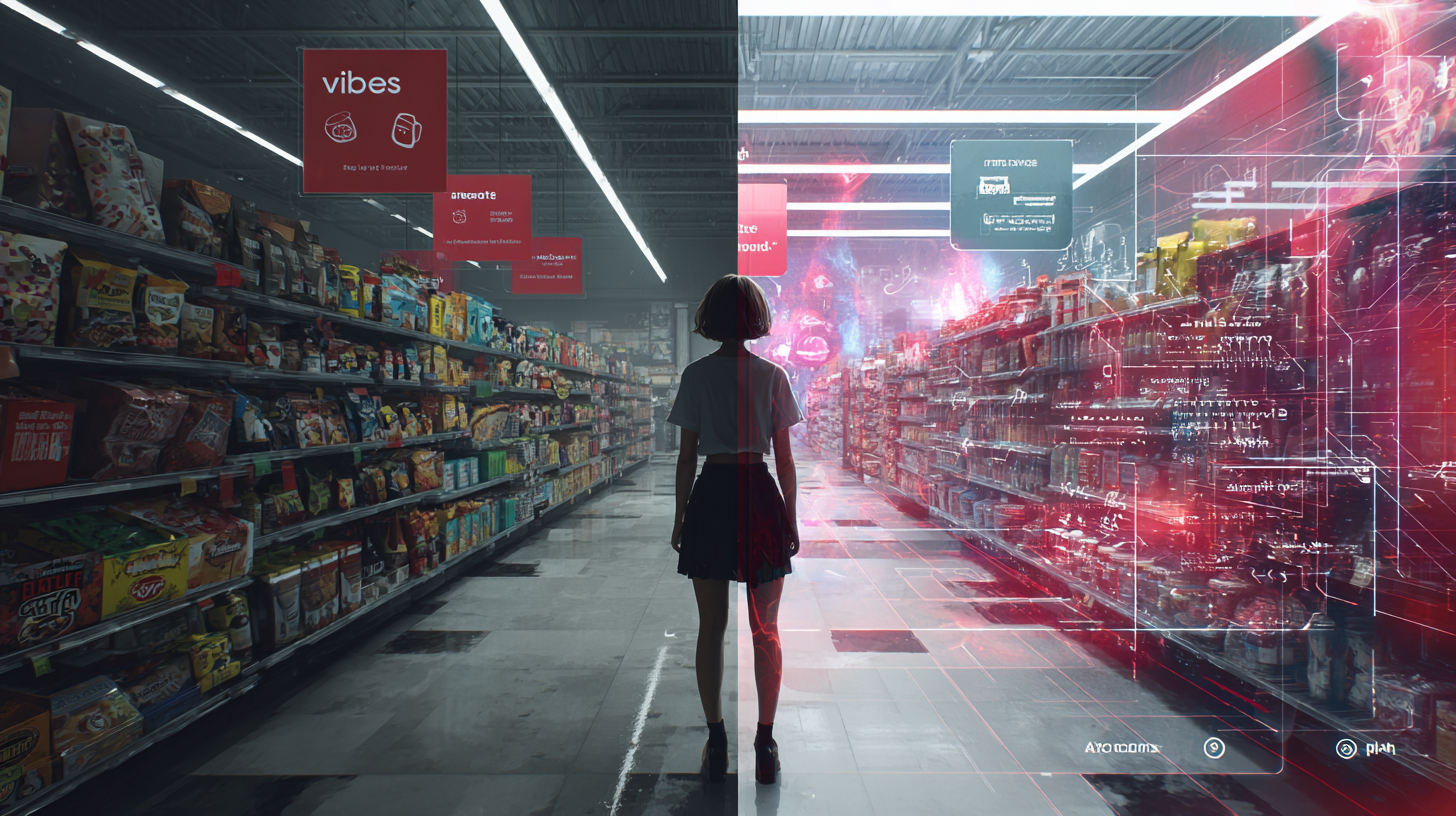
### The grocery store problem (but for images)
You walk in craving *something*.
Not pizza. Not salad. Just… the thing.
So you wander.
Grab stuff. Put it back.
“Close, but no.”
That’s AI image generation.
You have a **mental image**.
The model has **probabilities**.
Between them is a whole lot of disappointment.
—
## Here’s what’s actually happening

AI tools like Midjourney, DALL·E, and Stable Diffusion aren’t failing randomly.
They’re doing exactly what they’re built to do.
Just not what you *meant*.
The gap comes from two sides:
– **Human psychology**
– **Model mechanics**
Let’s unpack both—fast.
—
## The human side: your brain is picky (and vague)
You know it when you see it.
But describing it? Brutal.
Key friction points:
– You have an **implicit vision** you can’t fully verbalize.
– Text prompts can’t capture subtle things like *taste*, *spark*, or *feels right*.
– Near-misses feel worse than bad outputs (“ugh, it’s *almost* there”).
– You notice tiny flaws immediately: weird hands, off anatomy, wrong context.
– Infinite options trigger the **slot machine effect**: “Just one more run…”
Early novelty fades.
Your standards rise.
Rejection rate goes up.

Some people love this chaos.
They treat it like a creative casino.
But if you have a **specific outcome in mind**?
Yeah—this gets frustrating fast.
—
## The technical side: the model is rolling dice
Even with a perfect prompt, AI images are:
– **Stochastic** (aka: random by design)
– Sampled from massive probability spaces
– Influenced by seeds, samplers, and noise
Same prompt ≠ same image.
So if you want a *very specific* result?
You might literally need dozens of tries for the dice to land right.
Add prompt issues:
– Short prompts → generic mush
– Long prompts → ignored or scrambled instructions
– Multiple constraints → something always breaks
Classic example:
> “A woman in a green skirt in a classroom”
→ AI hears *green* and gives you trees. Outdoors.

Fix one thing.
Another thing breaks.
Why?
Because the model doesn’t understand intent—only correlations.
That’s the real **expectation gap**:
human context vs. probabilistic pattern‑matching.
—
## When the gap gets *huge*
Not all use cases suffer equally.
The gap explodes when:
– Stakes are high (prints, gifts, professional work)
– Details matter emotionally or personally
– Consistency is required (branding, characters, series)
– Scenes are complex (multiple people, interactions, poses)
Common realities:
– 40 images → maybe 4 usable ones (especially with humans)
– Consistent characters? Nearly impossible without extra tooling
– Professional teams spend *hours* generating *dozens* of options
– Pure prompting rarely hits 100% fidelity
Low‑stakes stuff (memes, backgrounds, experiments)?
People settle quickly.

High‑stakes visuals?
Iteration city.
—
## Why pros don’t panic about this
Professionals don’t expect magic shots.
They expect **shoot → curate → refine**.
Like photography in an infinite studio:
– Take tons of shots
– Pick the best
– Fix the rest in post
They assume:
– Manual edits will happen
– AI won’t nail everything
– Curation *is* the craft
That mindset matters.
—
## How people actually reduce the pain
No silver bullets.
But a lot of leverage.

### 1. Prompt for essentials, not everything
– Be clear about **subject, setting, style, mood**
– Focus on **3–5 core elements**
– Skip fluff and contradictions
– Break complex scenes into stages
**Specific beats verbose.**
—
### 2. Use negative prompts like a bouncer
Tell the model what’s *not* invited.
Common bans:
– text, watermark
– blurry, deformed, extra limbs
– unwanted objects or backgrounds
This alone kills a ton of repeat failures.
—
### 3. Control randomness (seeds + variations)
– Lock a seed once you get an *almost-right* image
– Tweak from there instead of restarting
– Use variation/remix tools to stay in the same neighborhood
– Adjust guidance or samplers when precision > creativity
Stop re‑rolling from zero.
—
### 4. Fix parts, not everything (inpainting)
Hands wrong?
Mask them. Regenerate *just* that area.

This is how you avoid trashing good compositions.
—
### 5. Work in stages (like an artist)
Sketch → refine → detail.
Examples:
– First pass: pose + composition
– Second pass: clothing or style
– Third pass: fixes via inpainting or img‑to‑img
Less overload. More control.
—
### 6. Train the model when stakes are real
For advanced users:
– Fine‑tune with DreamBooth or LoRA
– Teach the model a character or style once
– Stop begging it to guess correctly every time
Heavy lift upfront.
Massive payoff later.
—
### 7. Keep a human in the loop
This is the big one.

– Take a decent image
– Edit it manually
– Combine elements from multiple generations
– Adjust color, contrast, details
**AI is the sketch artist. You’re the closer.**
—
## The real takeaway
> *AI isn’t a magic lamp. It’s a fast, weird apprentice.*
The aesthetic gap isn’t a failure.
It’s a workflow reality.
People who struggle:
– Expect one prompt → perfect image
People who win:
– Expect iteration
– Inject control
– Edit without guilt
The gap hasn’t vanished.
But with skill, tools, and realistic expectations?
You can shrink it from **100 tries to 10**.
—

**Question:**
Where does AI frustrate you most right now—prompting, consistency, or cleanup?
(If you want, I can share a dead‑simple prompt + refinement checklist.)
#AIPrompting #ArtExpectations #AIArtistry #CreativeHustle #MindTheGap #ArtWithAI #VisualVibes #AlmostThere #FixYourArt #HustleAndCreate