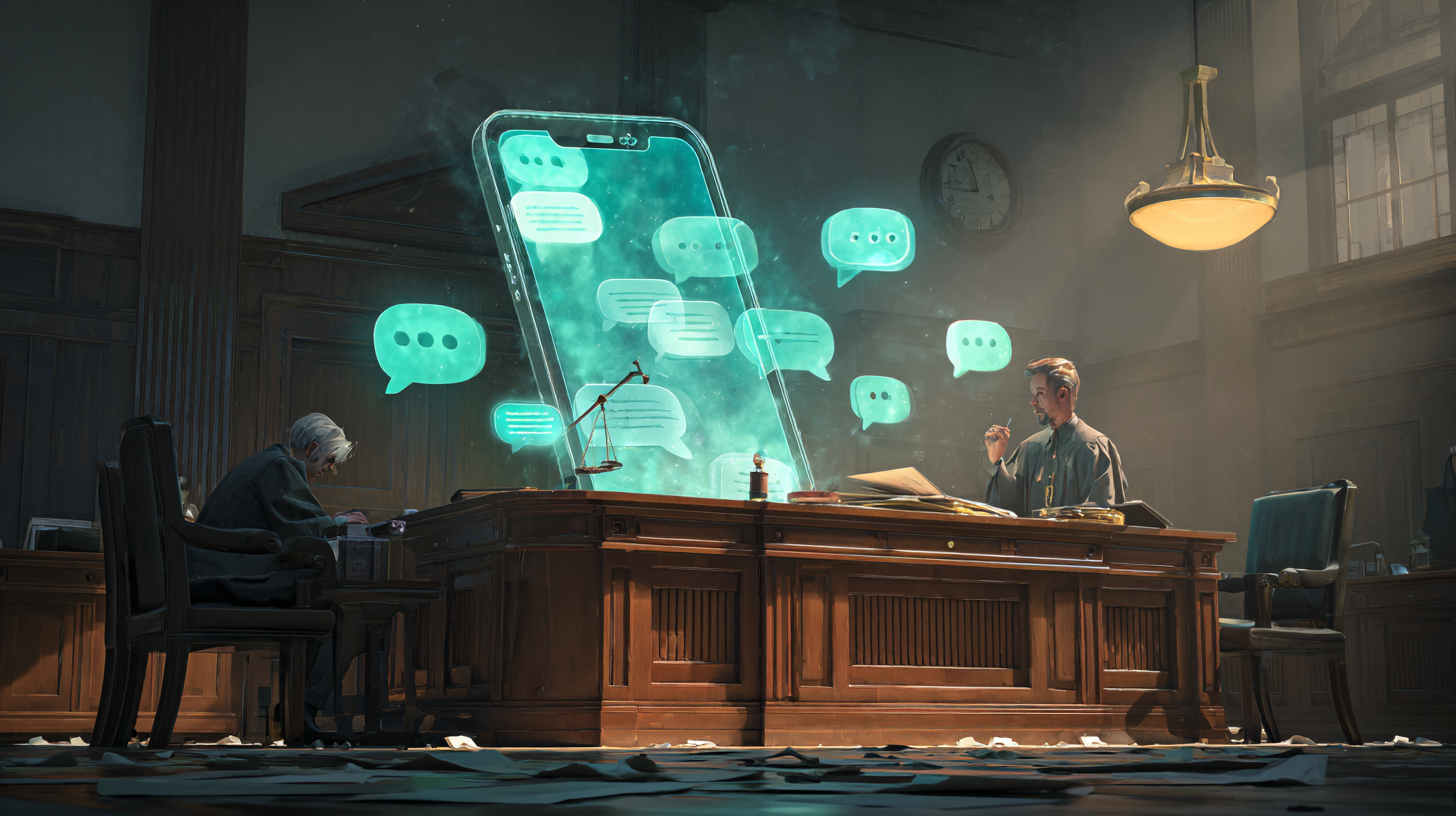
**Hot take:** Your ChatGPT chats aren’t a diary.
They’re evidence.
In January 2026, a federal court ordered OpenAI to hand over **20 million ChatGPT conversation logs** in a copyright lawsuit.
Not summaries. Not cherry-picked snippets.
The whole anonymized sample.
Here’s what actually happened — and why users should care.
—
## The short version (that still matters)
A U.S. District Court in New York told OpenAI:
**“Produce all 20 million logs. No filtering.”**
OpenAI tried to narrow it.
The court said no.
This is now one of the most important discovery rulings in AI history.
—

## The story (think airport security, not diary locks)
Imagine TSA says:
“Show us a random bag sample.”
You respond:
“Sure — but only the bags I already checked myself.”
That… didn’t go over well.
OpenAI originally agreed to a **random 20M-log sample** (about **0.5%** of all preserved chats).
Then tried to only hand over chats flagged by keyword searches for the plaintiffs’ content.
The court called that **cherry-picking**.
And shut it down.
—
## Here’s what’s actually happening
– A federal judge (Sidney H. Stein) upheld a prior discovery order.
– OpenAI must hand over **all 20 million anonymized chat logs**.
– The logs go to the plaintiffs’ lawyers and experts.
– Strict protections apply — but disclosure is mandatory.

This is part of a massive copyright fight over **how ChatGPT was trained and what it outputs**.
—
## Who’s suing — and why
This is a consolidated lawsuit involving **16 copyright cases**.
**Plaintiffs include:**
– *The New York Times*
– *Chicago Tribune*
– Other major U.S. and international publishers
– Authors and content creators
**Their claim:**
OpenAI trained ChatGPT on copyrighted articles and books **without permission**, and the model sometimes outputs content that **replicates or closely summarizes** those works.
They’re not just chasing edge cases or “prompt hacks.”
They want to know if **normal users**, asking normal questions, get copyrighted material back.
—
## Why the court wanted ALL 20 million logs

This part is key.
The court said relevance isn’t just:
> “Did ChatGPT quote this article verbatim?”
It’s also:
> “Does ChatGPT act as a substitute for reading the original work?”
Under U.S. fair use law, **market harm matters**.
So the judges agreed:
– Even chats **not mentioning the plaintiffs** could show harm.
– Patterns across millions of outputs matter.
– Keyword searches miss the bigger picture.
**Quote-worthy line:**
> *You can’t test a system-wide behavior with hand-picked data.*
—
## Why OpenAI’s privacy argument failed
OpenAI argued:
– Users share sensitive, private information.
– **99.99%** of chats are irrelevant to copyright.
– Massive disclosure breaks “common-sense security practices.”

The court responded with safeguards, not sympathy.
**What the court relied on:**
– **Exhaustive anonymization** (PII stripped out)
– A strict **protective order**
– **“Attorneys’ Eyes Only”** access for sensitive data
– Use limited strictly to this litigation
The judges also made a blunt distinction:
– ChatGPT users **voluntarily submitted** their messages.
– This isn’t like secret wiretaps.
Once identifiers are removed, the remaining content doesn’t get special immunity.
—
## The quiet bombshell: your chats are discoverable ESI
Legally, ChatGPT logs are now treated like:
– Emails
– Server logs
– Internal documents
They’re **Electronically Stored Information (ESI)**.
Earlier in the case, OpenAI was ordered to **preserve all ChatGPT logs** — resulting in **tens of billions** of stored conversations.

That includes chats users thought were deleted.
Why?
Because once litigation is foreseeable, **deletion stops by law**.
—
## Why this matters (for OpenAI *and* users)
– **OpenAI loses narrative control**
Plaintiffs’ experts now mine raw data for patterns that could weaken fair use defenses.
– **New precedent for AI discovery**
Courts are signaling: privacy ≠ immunity.
– **Industry ripple effects**
Plaintiffs are already seeking logs from other AI systems (e.g., GitHub Copilot).
– **User trust takes a hit**
Even anonymized, people don’t love the idea of lawyers reading their chats.
– **“Deleted” doesn’t always mean deleted**
Legal holds override product promises.

—
## Are anonymized logs actually safe?
Mostly protected.
Not perfect.
**Real risks still exist:**
– Personal details embedded in message text can slip through.
– Unique stories can be re-identified with outside knowledge.
– Data shared = higher breach risk, even under court controls.
The logs won’t be public.
But excerpts *could* appear in sealed or unsealed court filings if relevant.
As one commentator put it:
> *“Anyone who trusted ChatGPT with their darkest secrets might flinch now.”*
—
## What ChatGPT users should do next (no panic, just clarity)
1. **Assume chats can be stored**
Even if you delete them.

2. **Don’t paste ultra-sensitive info**
Passwords, SSNs, medical details, proprietary business data.
3. **Use privacy controls intentionally**
They help — but they’re not lawsuit-proof.
4. **Treat AI like email, not a therapist**
Useful. Powerful. Not confidential.
5. **Watch policy updates closely**
This case will shape future data practices.
—
## The bigger takeaway
Courts are cracking open the AI black box.
And they’re choosing **transparency over convenience**.
**Memorable line:**
> *If it’s logged, it’s litigable.*
Question for you:
Did this ruling change how you think about using ChatGPT — or were you already assuming this was possible?

#ChatGPTRealityCheck #PrivacyIsMyth #DataDrama #LegalEagleAlert #AIChatConfessions #NotYourDiary #SubpoenaSurprise #PrivacyPanic #ThinkBeforeYouType #LitigationAwareness