NBIS Isn’t Just Another AI Stock — It’s a Leveraged Bet on the Entire Buildout
If you’re looking for a sleepy AI compounder, keep scrolling. Nebius Group (NBIS) is something else entirely — a high-beta, capital-hungry, execution-or-die wager on the most capital-intensive phase of the AI cycle.
And yes, it might be the purest public-market trade on the AI infrastructure boom right now.
But don’t confuse “pure” with “safe.”

The Bull Case: Contracts, Capacity, and Controlled Chaos
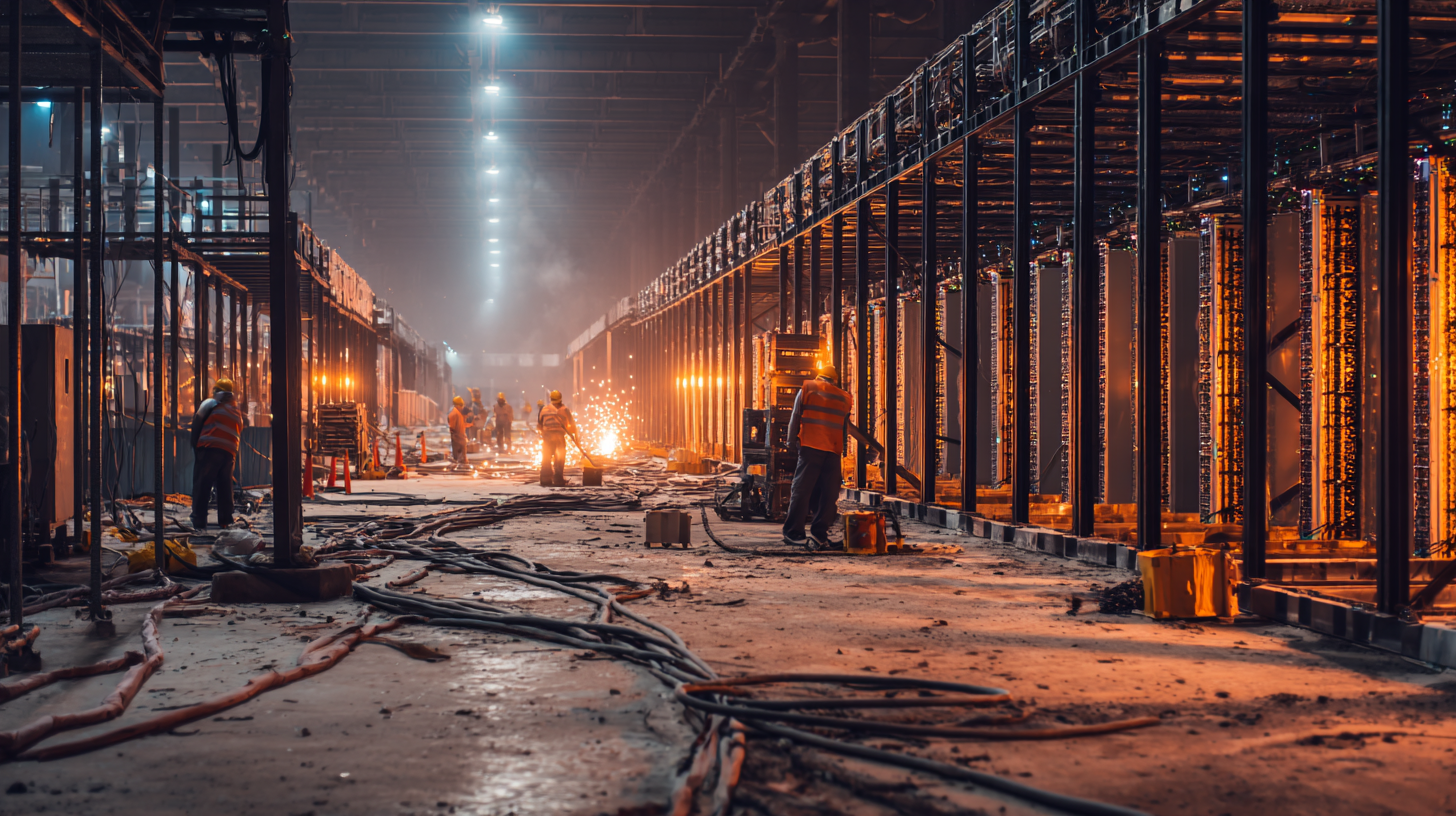
Nebius isn’t pitching chatbots. It’s selling power. GPU clusters. Data center capacity measured in megawatts and gigawatts — the industrial plumbing of AI.
The numbers are loud:
- Q3 2025 revenue: ~$146M, up ~355% YoY
- Five-year Microsoft deal: $17.4B–$19.4B
- Meta contract: ~$3B over five years
- 2026 ARR target: $7B–$9B
- Contracted power target: 2.5 gigawatts
That’s hyperscaler-scale ambition.

The Microsoft deal alone transformed the narrative. It validated demand and handed Nebius credibility overnight. The stock reacted like you’d expect — explosive move up, followed by volatility that would make a crypto trader sweat.
This is what high beta looks like in the AI era. When risk appetite is strong, NBIS rips. When rates tick up or data center fears flare, it drops fast.
And that’s the point.
The Bear Case: Priced for Perfection, Funded by Dilution

Here’s the uncomfortable part: NBIS trades at nosebleed multiples — forward price-to-sales estimates have floated north of 60x.
That’s not cheap. That’s venture capital pricing in public markets.
The company is still losing money. It raised roughly $4.2B in 2025 through equity and convertibles. More capital will be needed. Data centers aren’t SaaS. They’re concrete, transformers, cooling systems, and GPU supply chains that can choke overnight.
Any delay in power hookup, any GPU bottleneck, any hyperscaler pulling back on AI capex — and the story gets repriced fast.
And remember: their customers are giants. Microsoft and Meta don’t need Nebius. Nebius needs them.

Why This Is a High-Beta Trade — Not a Core Holding
NBIS behaves like a derivative on AI infrastructure spending.
If the AI buildout continues at full throttle into 2026 — and hyperscalers keep signing 5-year capacity deals like they’re buying cloud storage in 2015 — NBIS has torque. Real torque. ARR scaling from ~$1B to potentially $7B+ in a year? That’s how you justify absurd multiples.
But if macro conditions tighten or AI demand cools from “arms race” to “rational budgeting,” this stock won’t gently drift down. It will gap.

This isn’t Nvidia. It’s not even a diversified cloud. It’s concentrated, leveraged growth.
Which is exactly why traders love it.
The Bigger Picture: We’re in Phase Two of AI
Phase one was chips. Nvidia won.

Phase two is power, cooling, and data center capacity. That’s where Nebius plays.
If you believe AI workloads are compounding exponentially — training, inference, enterprise adoption — then the infrastructure layer still has years of runway. The arms race hasn’t ended. It’s expanding.
But infrastructure booms don’t fade gracefully. They overshoot. Then they correct.
NBIS sits right at that fault line.

So Is NBIS the Next High-Beta AI Trade?
Yes. That’s exactly what it is.
It’s not a widows-and-orphans stock. It’s not a slow compounder. It’s a volatile, capital-intensive bet that the AI buildout cycle stays aggressive through 2026 and beyond.
If that thesis holds, NBIS has room to run — hard.
If it cracks, the downside will be just as dramatic.

The real question isn’t whether NBIS is high beta. It is.
The question is whether you believe the AI infrastructure spending spree is just getting started — or already peaking.
#AIInvestment #TechBoom #NebiusGrowth #HyperscalerBet #FutureOfAI #DataCenterRevolution #PowerAndChips #AIBoom2026 #BigTechDeals #MarketVolatility