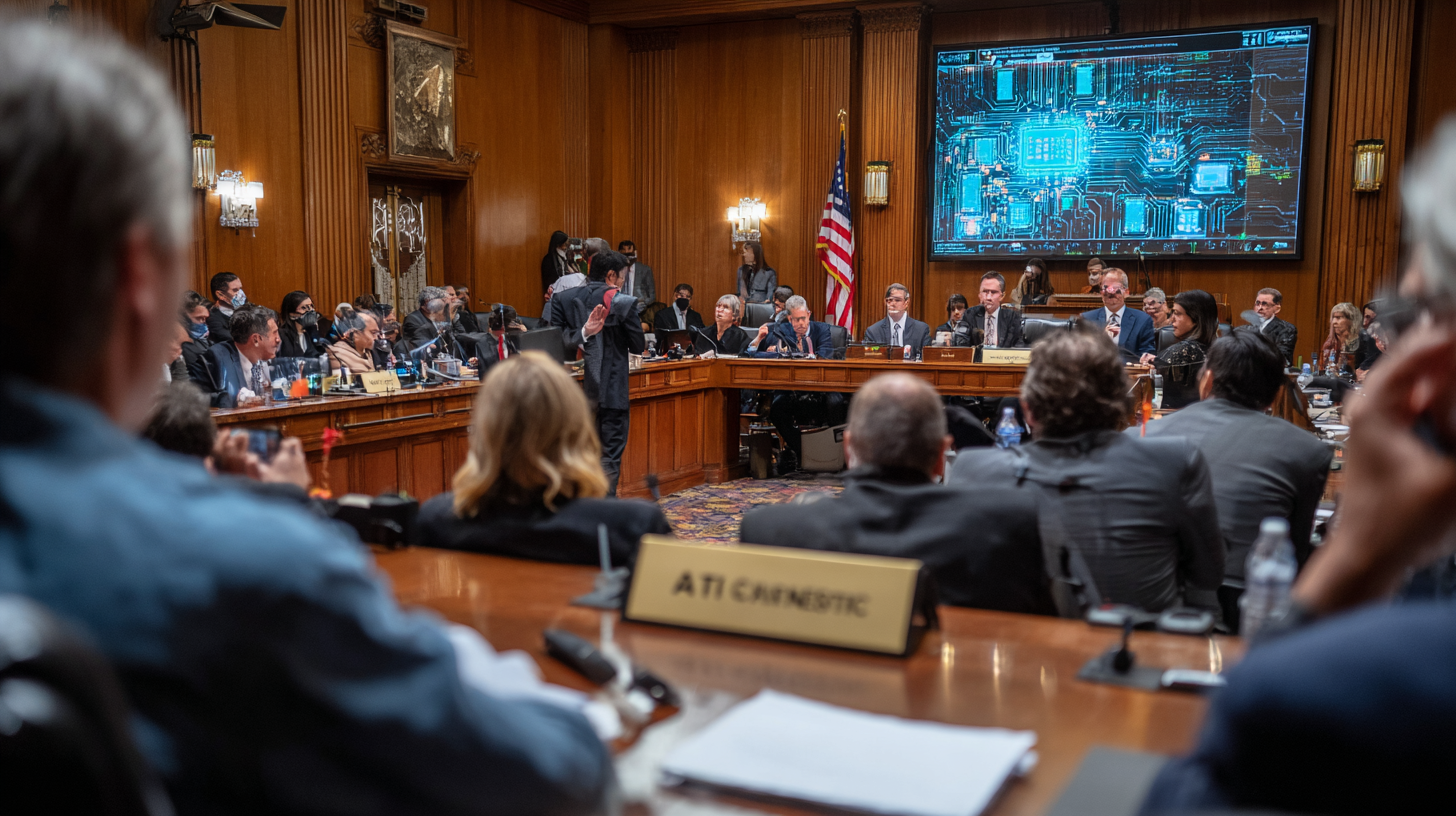
What if the biggest threat to Big Tech’s AI dominance isn’t a scrappy startup—but the FTC?
For years, Amazon, Meta, and Nvidia operated on a simple formula: grow fast, buy faster, and build moats so wide regulators couldn’t see the other side. That era is over. The FTC’s antitrust push—spanning Meta’s social empire, Amazon’s marketplace machine, and broader AI investment probes—isn’t just about punishing past behavior. It’s quietly reshaping who gets to win the AI race.
And investors in AMZN, META, and NVDA should be paying attention.
The FTC Is Playing the Long Game
Start with Meta. The FTC’s lawsuit—originally filed in 2020 and backed by 46 states—aimed to unwind Instagram and WhatsApp, arguing Meta bought its way out of competition. In late 2025, a federal judge ruled Meta wasn’t a monopoly at the time of decision. A clear courtroom win. But the FTC appealed in early 2026.

Meta avoided a breakup—for now. But the message is unmistakable: large AI-era acquisitions will face brutal scrutiny. The days of “buy first, argue later” are gone.
Then there’s Amazon. The FTC’s 2023 lawsuit, joined by 17 states, accuses the company of abusing its dominance over sellers and pricing. Core federal claims are moving forward, with trial set for October 2026. On the surface, this is about e-commerce. Underneath, it’s about platform power.
Because AI is increasingly platform-dependent.
If Amazon controls the marketplace, the cloud (AWS), and the pipes through which AI agents transact, regulators won’t treat those as separate silos. They’ll see an integrated control stack. And they’ll act accordingly.
AI Is the New Antitrust Battleground

The FTC launched a sweeping inquiry in 2024 into AI investments and partnerships involving Amazon, Microsoft, Google, OpenAI, and Anthropic. This isn’t random. Regulators are zeroing in on a new kind of consolidation: minority stakes, compute partnerships, talent acquisitions—what some lawmakers now call “reverse acqui-hires.”
That’s where Nvidia enters the frame.
Nvidia isn’t being sued like Meta or Amazon. But it sits at the choke point of AI infrastructure. Training and inference at scale still run on its chips. Lawmakers have already called for scrutiny of licensing deals and talent acquisitions that expand Nvidia’s grip across both hardware and software layers.
Here’s the risk: if regulators decide AI compute is essential infrastructure—like telecom in the 20th century—Nvidia’s dominance won’t be treated as a market triumph. It’ll be treated as a structural vulnerability.
And structural vulnerabilities get regulated.

What This Means for AMZN
Amazon’s biggest AI asset isn’t Alexa. It’s AWS.
If the FTC succeeds in limiting Amazon’s ability to favor its own services or penalize third-party sellers, that logic could extend to AI services hosted on AWS. Imagine a world where Amazon can’t privilege its own AI models, can’t bundle compute discounts to lock in partners, or faces constraints on how AI agents interact with its marketplace.
That would slow the flywheel.
But here’s the twist: tighter antitrust enforcement could also protect Amazon from being undercut by even bigger AI conglomerates. If regulators clamp down across the board, AWS’s scale advantage becomes less about dominance and more about reliability. Amazon loses some strategic flexibility—but keeps its infrastructure crown.

What This Means for META
Meta escaped a breakup, but it didn’t escape scrutiny.
The FTC’s loss in court actually raises the bar for future cases: regulators now have to prove present monopoly power in fast-moving markets. That favors Meta in AI, where competition from TikTok, YouTube, and emerging generative platforms muddies the field.
But it also limits Meta’s M&A strategy. If the next Instagram-equivalent in AI emerges—a breakout model company, a social AI network—Meta won’t be able to casually acquire it. Organic innovation becomes mandatory.
That’s a cultural shift for a company that grew by acquisition.

The upside? It forces Meta to build. And in AI, in-house breakthroughs (Llama, open-weight models) are becoming a strategic hedge against regulatory friction.
What This Means for NVDA
Nvidia is the quiet giant in this story. No splashy monopoly trial. No headline-grabbing breakup talk. Just a slow drumbeat of scrutiny around AI supply chains.
If regulators widen their lens from “consumer harm” to “compute concentration,” Nvidia faces two risks:
1. Pressure to loosen exclusive arrangements or licensing structures.
2. Political momentum to subsidize or accelerate rival chip ecosystems.

Neither kills Nvidia’s business. But both chip away at its margin power.
And yet—here’s the contrarian take—regulatory pressure may actually entrench Nvidia in the short term. Slower consolidation among cloud giants means more fragmented AI players. More fragmentation means more customers. And most of them still need Nvidia GPUs.
Antitrust can restrain platforms. It rarely builds competitors overnight.
The Bigger Picture: AI Won’t Be Won by Acquisition
The FTC’s actions signal a shift from reactive enforcement to structural containment. Regulators don’t want another social media consolidation story replayed in AI. They’re trying to freeze the board before a few players own everything from chips to models to distribution.

That changes incentives.
Big Tech can’t rely on buying the next wave. They have to invent it. And they have to do it under the assumption that every strategic partnership will be dissected in Washington.
For investors, this means fewer bolt-on growth stories and more emphasis on internal R&D strength. The companies that win won’t just have scale. They’ll have resilience—legal, operational, and political.
The AI boom isn’t happening in a regulatory vacuum. It’s unfolding under a microscope.
And the companies that adapt to that reality—rather than fight it—will own the next decade.

#FTCvsBigTech #AIRegulation #AntitrustAction #TechUnderScrutiny #InnovationInCourt #BigTechAccountability #AICompetition #RegulatoryRevolution #FutureOfAI #PowerOfRegulation